ABB Distributed Control Systems

Unlocking the Fastest ROI in Automated Processes for Manufacturers

December 19,2024

Why Automation is Key to Industry 4.0 Success

Manufacturers have long understood the value of automating manual processes. From reducing costs to improving quality and enhancing workplace safety, the benefits are undeniable. But as Industry 4.0 becomes the standard, manufacturers face a critical question: which processes should they prioritize for automation?

Since the term “Industry 4.0” was coined in 2011, many manufacturers have adopted a marathon-like approach to digital transformation, focusing on gradual and steady progress. This method has proven effective, especially for companies with limited budgets and without in-house technical expertise.

To maximize success, every automation strategy should consider three factors: the speed of return on investment (ROI), ease of implementation, and the impact on the workforce. Below, we explore three automation opportunities that excel in these areas.


Pick and Place Machines: Simple and Effective Automation

Pick-and-place operations involve repetitive tasks like moving components into position for further processing. These tasks, while monotonous, become hazardous when parts are heavy or in close proximity to dangerous machinery. Automating these processes can significantly improve safety and efficiency.

Robotic arms for pick-and-place tasks are among the most cost-effective automation solutions available. Many models are affordable, require minimal upfront investment, and can be programmed without coding expertise. This makes them accessible to manufacturers of all sizes.

For more demanding applications, such as palletizing, the initial cost is higher. For example, a standard automatic palletizer capable of handling one layer per minute starts at around €140,000, excluding integration and accessories. Additionally, programming and maintenance often require specialist support. Despite the slower ROI compared to simpler pick-and-place solutions, the benefits—such as improved staff safety and reduced risk of repetitive strain injuries—justify the investment in the long term.


Quality Assurance: Boosting Accuracy with Machine Vision

In Industry 4.0, quality assurance (QA) is a non-negotiable step in manufacturing. Yet, traditional machine vision systems—though effective—have been too expensive and complex for many manufacturers, leading them to rely on manual inspections.

Unfortunately, human inspectors are prone to fatigue and errors, especially when checking intricate products like printed circuit boards (PCBs), which may contain dozens of minuscule components. Automating QA processes with modern machine vision technology resolves these challenges, offering consistent defect detection and freeing personnel for more engaging, value-added tasks.

Today, low-code and no-code machine vision solutions are readily available, making it easier for manufacturers to adopt these systems without requiring extensive technical expertise. With these tools, businesses can ensure high-quality production standards while minimizing downtime and errors.


Data Entry: Streamlining Information Management

Accurate and timely data entry is crucial for processes such as predictive maintenance, inventory management, and financial reporting. Manual data entry, however, can be slow, error-prone, and a bottleneck for operations.

Automated data entry systems address these issues by using technologies like optical character recognition (OCR) to capture and process information from diverse sources, including PDFs, emails, and websites. These systems then organize the data into centralized storage platforms, such as databases or spreadsheets.

Popular applications of automated data entry include invoice scanning, audit report preparation, and customer survey analysis. Not only are these systems cost-effective, but they’re also easy to implement and manage. For example, Culverdocs offers a comprehensive data entry package for just £20 per user per month, making automation accessible even for smaller businesses.


Key Considerations for Manufacturers

Manufacturers face pressing challenges, including cash flow constraints, employee retention struggles, and a widening skills gap. By prioritizing automation projects that deliver quick ROI, are easy to implement, and positively impact the workforce, businesses can accelerate their journey to digital transformation.


Embrace Automation for Long-Term Success

Automation offers manufacturers the tools to enhance efficiency, safety, and quality in their operations. By focusing on pick-and-place systems, quality assurance, and data entry—three areas with proven ROI—businesses can make significant strides in their digital transformation journey. Embracing these solutions not only strengthens competitive advantage but also ensures a sustainable future in the era of Industry 4.0.


Hot selling models:

ABB BCU-22 3AUA0000110431

5PP320-0573-39

BMI1003P06A 2000W

ABB C100/0100/STD

DS45K7302-D V0.016

HMIBSCEA53D1L0A

ABB FEA-01 3AUA0000052932

8B0C0160HW00.000-1 . F0 C0160

SGDC-50AJAY16 5KW

ABB 336A4976ATP051

PC3100 5S1AB0004000L0-001

CACR-HR10BAB CACR-HR10BAB8

ABB DSQC406

PAS800 01437

7ML5750-1AA00 SITRANS RD500

ABB SPS02 7760690157

SR085-TT-05-09-223T1-V144

SGMGV-20DDA6H

ABB DSQC223

RED-LION G310R210 AK230547

6PPT30.0702-20B

ABB 3EHL409054R0001 KUB921 A01

AKM65K-ACCNR-B0

KBA IPC 5000 5D5500.06

GE IS200EPSMG1AEC

PSBF521 CMP63S/BK/KY/AK1H/SB1

8LSA36.DA030S000-3

GE IC697CHS750

AB7680-F AK230509

IO110S 8BVI0110HCS0.000-1

GE IC200UDD104

DQ1861A -200 to 1370C

KUKA KRC2 00-130-764 00130764

GE IS200WREAH1ADB

ELMO HAR-12/60-20

6SN2155-2BD11-1BA1

GE IS420ESWAH1A

1045 8V1045.00-1

XD-50-TN V3.30 XD50TN

GE 531X111PSHARG3

GL15-ASSY-E087495 H5711622

VNT 61240-PEGD-AYG1/0001

GE 531X307LTBAKG1

IP241 6ES5241-1AA12

PXT 305 COM-LC KIT

SIEMENS 6DS1300-8AB

DM10/40 36003020 4284942

CPX 2500S952-500128 AK230330

SIEMENS 6ES7315-1AF03-0AB0

6BK1942-1AA00-0AA0 HCS CIM4210

ISEL CVD 3 SYSTEM 352053 0030

SIEMENS 6DD2920-0AR6

RZC01.1-6N005F23

Aspect 04/08 882136 8813 77

SIEMENS 6ES5948-3UR23

RZC01.1-6N011F23

KRC2 00-127-755 00127755

SIEMENS 7KG8000-8AB20/FF

PCI-7356 190975E-06L

80VD100PD.C000-01

SIEMENS 6DR2410-4

6ES7616-2QL00-0AB4

BMH1003P06F2A

SIEMENS 6DS1121-8BB

1797-IE8NF SER. A 95732302

TJI-MC16 CJ1W-PA202

SIEMENS 39RTMCAN 16207-61/10

BNI0098 BNI IOF-3290P02-Z038

ISOFLUX 4451200331 GMD3


News & Blogs

  • How Honeywell Enhances Process Control Reliability with the CC-TAOX01 51308351-175 Analog Output Module 20/03

    2026

    How Honeywell Enhances Process Control Reliability with the CC-TAOX01 51308351-175 Analog Output Module
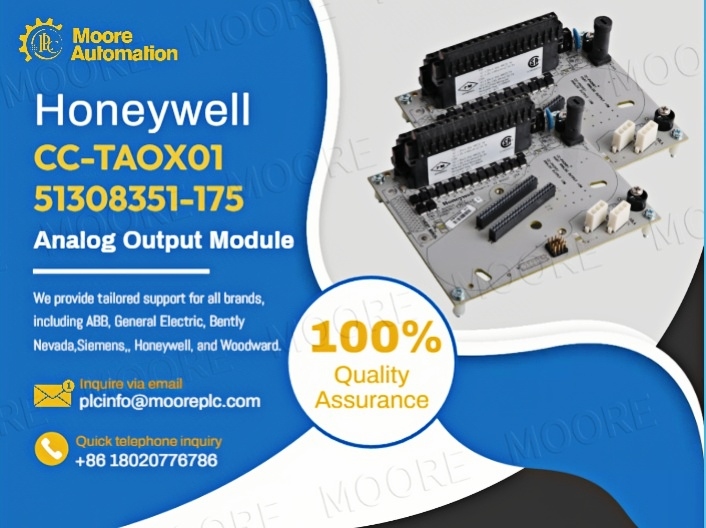
    Understanding the Role of Analog Output Modules in Modern DCS Systems In industrial automation, control systems rely on accurate signal delivery to ensure equipment responds correctly to operational commands. The Honeywell CC-TAOX01 51308351-175 Analog Output Module converts controller instructions into stable 4–20 mA signals that can drive various field instruments. This function is essential for maintaining smooth communication between the central control system and process equipment. From a plant operator’s perspective, dependable DCS spare parts are necessary to keep production lines running efficiently. An analog output module with multiple channels can support different control points at the same time, helping engineers manage several devices without increasing system complexity. With 16 output channels and a load capacity of up to 800 ohms, this module offers practical flexibility for process control tasks. Why the Honeywell CC-TAOX01 Module Matters for Process Stability Reliable output performance is crucial in environments where automation systems operate continuously. The CC-TAOX01 module supports a maximum compliant voltage of 16 V and an open circuit voltage of 22 V, helping maintain consistent signal levels for connected field devices. Stable electrical performance allows the control system to regulate operations accurately. For organizations searching for Distributed Control System replacement parts, maintaining compatibility with the original system architecture is often a major concern. The Honeywell CC-TAOX01 is designed to integrate directly with existing Honeywell control platforms, enabling straightforward replacement without requiring extensive configuration changes. How the CC-TAOX01 Supports Efficient System Maintenance In many industrial plants, quick maintenance response is essential to avoid long production interruptions. Keeping reliable DCS spare parts available allows technicians to replace malfunctioning components promptly. The CC-TAOX01 module is built for simple installation, making it easier for maintenance teams to restore control system functionality. Working with an experienced DCS module supplier also helps companies streamline their spare parts management. Suppliers specializing in automation components can provide tested modules and technical support, ensuring customers receive suitable products for their control systems while reducing maintenance uncertainty. Which Features Make the CC-TAOX01 a Practical Replacement Choice When evaluating Distributed Control System replacement parts, engineers often consider channel capacity, durability, and signal reliability. The CC-TAOX01 includes sixteen analog output channels, enabling multiple process signals to be handled by a single module. This design can reduce hardware requirements and simplify the control cabinet layout. Another advantage is the use of the widely accepted 4–20 mA signal standard. This format ensures compatibility with many types of industrial i...
    All News
  • What Makes Bently Nevada 330930-045-00-05 3300 NSv Extension Cable Essential for Reliable Turbine Monitoring? 13/03

    2026

    What Makes Bently Nevada 330930-045-00-05 3300 NSv Extension Cable Essential for Reliable Turbine Monitoring?
    What Is the Bently Nevada 330930-045-00-05 3300 NSv Extension Cable The Bently Nevada 330930-045-00-05 3300 NSv Extension Cable is a key connection component used in vibration monitoring systems. It links proximity probes to monitoring equipment, allowing accurate transmission of vibration signals from rotating machinery to the monitoring system. For customers operating turbines, compressors, or other high-value rotating assets, maintaining reliable signal transmission is essential for equipment protection. This cable is designed for use within turbine monitoring and condition monitoring environments where precision and reliability are required. As part of the broader ecosystem of TSI spare parts, the extension cable ensures that vibration data collected by probes reaches the monitoring system without signal loss. Stable data transmission is critical for accurate diagnostics and effective predictive maintenance. Why the 4.5-Meter Cable Length Matters for Industrial Installations One of the defining parameters of this model is the 045 cable length option, which equals 4.5 meters (14.8 feet). In many industrial environments, sensors and monitoring racks are not located close together. The additional cable length provides flexibility during installation and allows engineers to route cables safely around turbine housings or protective enclosures. From a customer’s perspective, choosing the correct cable length can prevent installation complications later. When vibration probes are positioned near turbine shafts while monitoring equipment is installed in control cabinets, the 330930 extension cable ensures the connection remains stable. For companies managing complex Turbine Supervisory Instrumentation components, proper cable configuration helps maintain signal integrity and reliable monitoring. How the Non-Armored Cable Option Improves Installation Flexibility The 00 connector and cable option means the cable is supplied without stainless steel armor. This design provides a lighter and more flexible cable structure, making installation easier in environments where mechanical protection is already provided by conduit systems or protected cable trays. For maintenance teams, this flexibility can simplify installation and replacement procedures. When replacing TSI modules or performing routine inspections on turbine monitoring systems, technicians often need cables that are easier to route and handle. The non-armored design allows faster installation while still maintaining the performance required for sensitive monitoring signals. Why Multiple Agency Approvals Matter for Industrial Safety The 05 agency approval option, which represents multiple approvals, is another important feature of the Bently Nevada 330930-045-00-05 cable. Industrial facilities often operate under strict safety and regulatory requirements, especially in sectors such as power generation, oil and gas, and petrochemical processing. For customers operating globally, components with mu...
    All News
  • What Makes the GE IS200DSPXH1DBD DSP Control Board a Game-Changer for Industrial Control? 04/03

    2026

    What Makes the GE IS200DSPXH1DBD DSP Control Board a Game-Changer for Industrial Control?
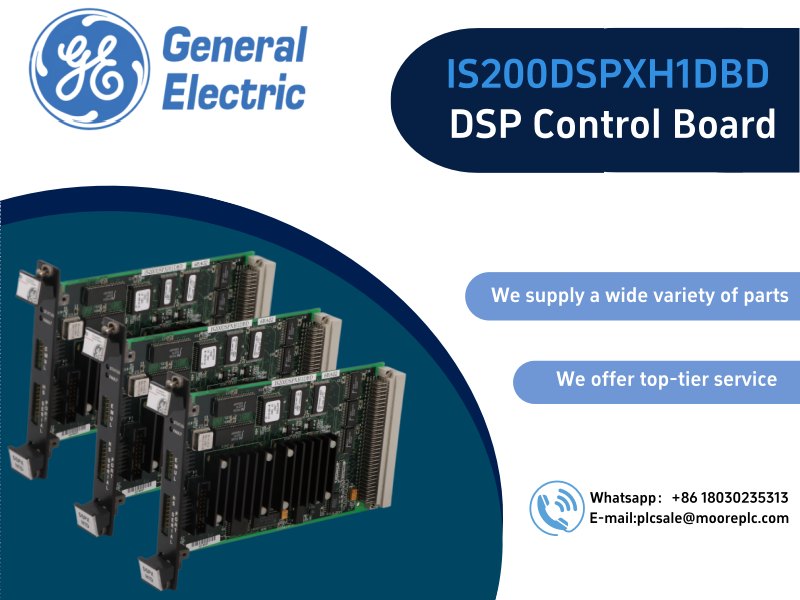
    The GE IS200DSPXH1DBD DSP Control Board is redefining efficiency and reliability in industrial automation. Designed to deliver precise digital signal processing (DSP) capabilities, it addresses the growing demand for high-performance turbine, generator, and industrial machinery control. Its robust architecture ensures seamless integration with existing control systems, minimizing downtime and enhancing overall operational efficiency. Why Upgrading to the IS200DSPXH1DBD Is Critical for Modern Industrial Operations Industries increasingly face challenges such as aging control hardware, unpredictable system performance, and escalating maintenance costs. The IS200DSPXH1DBD offers a forward-looking solution by providing high-speed processing, advanced fault diagnostics, and reliable real-time control. Upgrading to this control board enables predictive maintenance, reduces unscheduled outages, and improves the longevity of critical assets. Where Can the IS200DSPXH1DBD Deliver Maximum Value? This control board is ideal for high-demand industrial environments, including power generation plants, turbine control systems, and complex manufacturing facilities. Its compatibility with distributed control systems (DCS) and integration with other GE control modules makes it suitable for both retrofit projects and new installations. When Is the Right Time to Implement DSP Control Board Upgrades? Operators should consider upgrades during scheduled maintenance cycles, system modernization initiatives, or when performance monitoring indicates frequent operational deviations. Implementing the IS200DSPXH1DBD proactively ensures uninterrupted production and avoids costly emergency replacements. Which Features Set the IS200DSPXH1DBD Apart from Conventional Control Boards? Key differentiators include: ●High-speed DSP processing for real-time control and monitoring ●Advanced fault diagnostics with event logging ●Wide operating temperature range suitable for harsh environments ●Seamless system compatibility with existing control infrastructure ●Long-term reliability reducing lifecycle costs Who Benefits Most from the IS200DSPXH1DBD? Maintenance engineers, plant operators, and industrial system integrators benefit directly from its enhanced performance and diagnostics capabilities. The board also empowers decision-makers by providing actionable operational data that supports efficiency improvements and risk mitigation. How the IS200DSPXH1DBD Helps You Achieve Operational Excellence By integrating the IS200DSPXH1DBD into your control system, you gain: ●Enhanced precision control for turbines and industrial machinery ●Reduced downtime through predictive maintenance alerts ●Simplified troubleshooting with comprehensive diagnostics ●Increased ROI via improved efficiency and asset longevity In an era where industrial systems demand higher performance and reliability, the GE IS200DSPXH1DBD DSP Control Board provides a comprehensive solution that aligns with modern operational cha...
    All News
  • ABB SD822 Power Module: Reliable and Efficient Industrial Power 27/02

    2026

    ABB SD822 Power Module: Reliable and Efficient Industrial Power
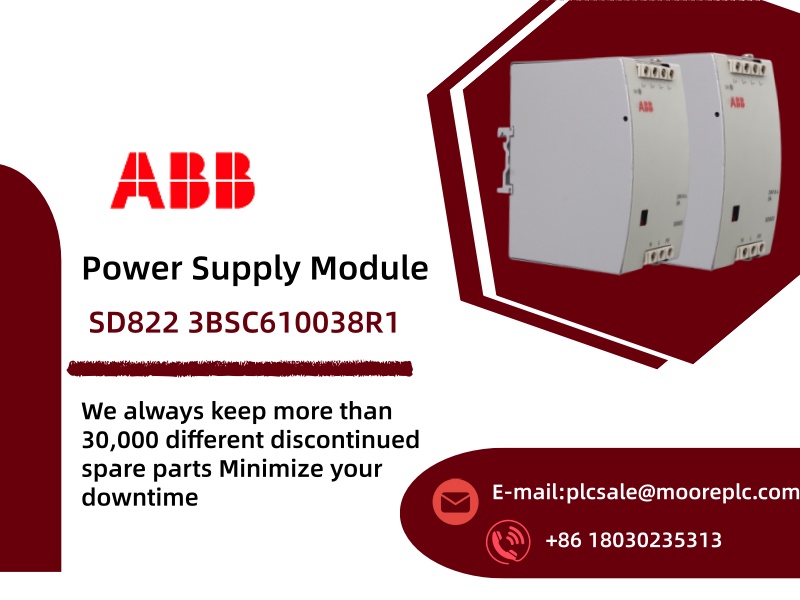
    What Makes the ABB SD822 Power Supply Module a Reliable Choice for Industrial Systems? The ABB SD822 3BSC610038R1 Power Supply Module is engineered to deliver stable, uninterrupted power to industrial control systems, effectively minimizing the risk of unplanned downtime and critical system failures that can lead to substantial production losses. Its robust mechanical and electrical design is built to withstand the harsh conditions of industrial environments—including extreme temperatures, voltage fluctuations, and mechanical vibration—supporting 24/7 continuous operation. This level of durability makes it an ideal power solution for critical infrastructure where reliability is non-negotiable, such as industrial control panels, automation networks, and mission-critical process systems. Why Upgrading to the ABB SD822 Module Improves Operational Efficiency Upgrading to the ABB SD822 module translates to tangible operational efficiency gains, thanks to its advanced voltage regulation technology and comprehensive protection mechanisms. The module’s precision voltage control ensures consistent power delivery to sensitive control components, minimizing energy loss and optimizing the performance of connected systems. Additionally, its built-in protection features reduce the frequency of equipment malfunctions, leading to lower maintenance costs, fewer unexpected operational interruptions, and smoother, more predictable industrial processes. Over time, these benefits translate to improved productivity and a higher return on investment for industrial operations. Where Can the ABB SD822 Module Make the Biggest Impact? The SD822 power supply module excels in power distribution for industrial control centers, process plants, and automated production systems, where uninterrupted power is a prerequisite for safe and efficient operation. It delivers maximum value in high-stakes environments such as chemical processing plants (where power disruptions can cause hazardous material leaks), power generation facilities (critical for grid stability), large-scale manufacturing lines (to avoid costly production halts), and oil & gas refineries (where equipment failure risks operational safety). Its ability to maintain performance in harsh and demanding settings makes it a cornerstone of reliable industrial power infrastructure. When Should You Consider Replacing Your Current Power Supply? Industrial operations should prioritize upgrading to the SD822 module if they experience frequent system resets, inconsistent voltage output, rising maintenance costs, or aging power supply units (typically those older than 5-7 years). Early replacement is a proactive measure to prevent costly unplanned downtime, protect sensitive control equipment from voltage surges or drops, and avoid cascading system failures. Additionally, if your current power supply struggles to meet the increasing power demands of upgraded automation systems, the SD822’s flexible design ensures it can adapt...
    All News
  • What Are the Key Benefits of Using GE Distributed Control System Replacement Parts? 17/03

    2026

    What Are the Key Benefits of Using GE Distributed Control System Replacement Parts?
    Overview of GE DCS Replacement Part For industries operating with distributed control systems, maintaining consistent performance requires reliable component support. GE Distributed Control System replacement parts provide a practical option for keeping both legacy and newer systems functioning without frequent shutdowns. Adding these industrial spare parts into planned maintenance schedules helps reduce unexpected equipment issues and limits costly repairs. Using GE components allows facilities to maintain smoother operations and avoid unnecessary interruptions. Their compatibility with existing setups supports continuous production while strengthening overall spare parts management. Boosting Reliability and Efficiency GE DCS spare parts are widely selected for their dependable operation in complex industrial environments. These industrial automation parts are engineered to align with original system parameters, reducing the risks associated with mismatched components. For instance, GE IS200TRPGH2B is often applied where stable control performance is required. With properly fitted components, production systems can run with fewer interruptions. This reliability helps maintenance teams optimize workflows and improve spare parts management without frequent corrective actions. Enhancing System Longevity Routine replacement of aging parts with GE DCS replacement parts can significantly extend system service life. These industrial spare parts are designed for durability, supporting long-term use in demanding conditions. Regular upkeep using quality components helps prevent larger system failures and reduces wear over time. Equipment such as IS200TRTDH1CCC plays an important role in maintaining system stability. By relying on dependable replacements, operators can sustain performance and improve spare parts management efficiency. Seamless Compatibility with Existing Systems Upgrading or replacing components within an active control system requires precise compatibility. GE DCS spare parts are built to match original configurations, making installation more straightforward and reducing the need for system adjustments. Modules like IS200TBAIH1CCC are designed for direct integration, allowing for quick replacement and minimal downtime. This simplifies maintenance procedures and supports effective spare parts management. Long-Term Cost Savings Although original industrial spare parts may involve higher upfront costs, they often lead to savings over time. Their reliability reduces replacement frequency and helps avoid unexpected production stoppages. This contributes to more stable budgeting and improved spare parts management. Fewer breakdowns and less emergency maintenance result in lower overall operational expenses. Over the long term, dependable GE components provide a cost-efficient solution for continuous industrial processes. Safety and Compliance Assurance Ensuring compliance with safety standards is essential in industrial environments. GE DCS re...
    All Blogs
  • Which Automation Spare Parts Are Most Critical for Smart Factory Operations? 11/03

    2026

    Which Automation Spare Parts Are Most Critical for Smart Factory Operations?
    Why Automation Spare Parts Are Critical for Smart Factory Stability Today's manufacturing floors rely on networks of devices working together under tight coordination. A failure in one location can create delays that spread across the entire facility. Keeping selected automation spare parts onsite gives technicians the ability to replace failed units immediately. This approach reduces unplanned stoppages and helps factories maintain the output levels expected by their customers. Which Automation Components Should Be Prioritized in Spare Parts Planning Building an effective spare parts inventory starts with identifying components that appear in critical control paths. Items like programmable controllers, signal interfaces, and power distribution units typically belong in this category. For plants using turbines or large compressors, TSI spare parts are equally essential. These components deliver real-time measurements that operators depend on to evaluate machinery condition and adjust operating parameters. How TSI Spare Parts Support Equipment Monitoring and Safety Large rotating machines require continuous oversight to operate safely over long periods. Turbine Supervisory Instrumentation components track parameters such as shaft displacement, casing vibrations, and rotational speed. When monitoring hardware fails, engineers lose access to this important information. Maintaining spare TSI modules onsite ensures that monitoring capabilities can be restored promptly, allowing operations to continue with full awareness of machine status. Where Businesses Can Source Reliable Automation Spare Parts The best inventory plan loses value if replacement parts cannot be obtained when needed. Many manufacturers face delays because regular distributors do not stock specialized components. Suppliers with expertise in automation spare parts and specific knowledge of Turbine Supervisory Instrumentation components offer a practical solution. These organizations typically maintain broader networks and can locate TSI modules more efficiently than general industrial suppliers. How Smart Spare Parts Management Reduces Downtime Observing patterns in equipment failures provides useful guidance for inventory planning. By examining past repairs, maintenance teams can determine which automation spare parts should be kept available. Including TSI spare parts in this analysis protects monitoring systems from extended downtime when modules fail unexpectedly. This approach moves beyond guesswork and creates a reliable framework for maintaining production continuity. Conclusion Smart factory operations depend on both advanced technology and practical preparation. Maintaining a thoughtful selection of automation spare parts, particularly TSI modules for critical machinery monitoring, gives facilities the ability to respond quickly when problems arise and keep production moving forward. Hot Recommendations IC693CHS398 330180-91-05 MGC600-CPU HIEE300867R0001 PPB022 DE 330130-040-0...
    All Blogs
  • How ABB Automation Ensures Reliability, Safety, and Seamless Modernization? 04/03

    2026

    How ABB Automation Ensures Reliability, Safety, and Seamless Modernization?
    Ensuring Continuous Industrial Reliability ABB’s automation solutions deliver dependable performance for high-stakes industrial operations. Their robust design and real-time monitoring capabilities ensure that critical processes continue without interruption, even under extreme load or environmental conditions. Customers benefit from reduced unplanned downtime, enhanced process stability, and greater confidence in meeting operational targets. The system’s built-in diagnostics also help teams quickly identify and resolve potential issues before they escalate into costly failures. Seamless Upgrades for Aging Automation Systems Aging automation infrastructure is a common concern for many industrial facilities. ABB addresses this by providing long-term support and seamless integration with legacy equipment, allowing plants to upgrade control modules without needing a full system replacement. Certified ABB spare parts and backward-compatible modules ensure older systems remain fully operational, extend their lifecycle, and reduce capital expenditure. Customers gain a safer, cost-effective path to modernization without compromising system reliability. Intelligent Redundancy to Prevent Production Interruptions Unexpected production stoppages can have significant financial and operational impacts. ABB’s automation platforms feature advanced redundancy and fault-tolerant designs, enabling continued operation during maintenance, component replacement, or partial system failures. By maintaining uninterrupted workflows, these systems minimize operational risk, reduce recovery time, and provide plant operators with peace of mind that critical processes remain stable. Simplifying Spare Parts and Maintenance Planning Managing automation spare parts, especially for older or discontinued systems, can be complex and time-consuming. ABB simplifies this process with certified, ready-to-install modules that maintain performance consistency and compliance with safety standards. Customers experience predictable maintenance cycles, reduced emergency orders, and streamlined inventory management, ensuring that both routine operations and emergency interventions can be executed efficiently. Phased Modernization Without Operational Disruption Many industrial facilities prefer incremental upgrades rather than complete system overhauls to maintain continuous operations. ABB supports phased modernization, allowing individual automation controllers and modules to be upgraded independently. This approach enables facilities to adopt new technology at a controlled pace, enhance process safety and efficiency, and integrate advanced analytics or IoT capabilities, all without halting production or disrupting workflow. Key Industries Leveraging ABB Automation ABB’s industrial automation solutions are trusted across sectors where uptime, precision, and safety are critical. Key industries include: ●Oil & Gas: Upstream, midstream, and downstream operations requiring high availability...
    All Blogs
  • Schneider Electric’s AI Journey: From Lighthouse Factory to Industry Impact 27/02

    2026

    Schneider Electric’s AI Journey: From Lighthouse Factory to Industry Impact
    What is Schneider Electric's "Technology+Scenario" AI Dual Wheel Path? Schneider Electric is promoting the widespread application of artificial intelligence (AI) technology in industrial manufacturing, energy management, and operational scenarios, using "technological innovation+industry scenario implementation" as the dual engine to accelerate the digital transformation of physical industries. The company builds AI solutions through technology research and development, ecological collaboration, and practical scenarios, which not only improve efficiency, reliability, and sustainability, but also create practical value for customers. Schneider Electric's AI strategy not only focuses on algorithm research and development, but also emphasizes deep integration with industrial applications to form replicable industry solutions, allowing customers to quickly understand the actual value of technology implementation.   Why - Why adopt the "technology+scenario" path? In industrial enterprises, the introduction of AI can help companies deal with the complexity and uncertainty of the production process, such as predictive maintenance, energy efficiency optimization, and quality control issues. General AI models are often difficult to directly meet industry needs, so Schneider Electric adopts a "technology+scenario" strategy, closely integrating AI capabilities with specific business scenarios to truly improve production efficiency, reduce energy consumption, and achieve sustainable development, providing customers with practical and feasible solutions while reducing the maintenance pressure of traditional systems.   Where - What key industry scenarios does AI technology cover? Schneider Electric's AI implementation covers intelligent manufacturing, energy management, data center and building management, as well as supply chain and research and development processes. In the context of intelligent manufacturing, AI drives predictive maintenance and production process optimization to improve production line efficiency and equipment reliability. In the field of energy management, machine learning models optimize energy consumption, reduce energy waste, and improve overall system efficiency. In data centers and building management, AI technology optimizes intelligent cooling and power scheduling, simultaneously improving efficiency and sustainability. In the supply chain and research and development stages, AI algorithms are used to optimize design processes and scheduling strategies, improve overall operational efficiency and response speed, and enable customers to achieve quantifiable benefits in each stage.   When - What stage has Schneider Electric's AI landing entered? In recent years, Schneider Electric's AI strategy has entered the stage of scale implementation from the exploration pilot phase. At the recent World Artificial Intelligence Conference (WAIC 2025), the company showcased multiple AI achievements, including smart factory practice...
    All Blogs
leave a message
If you are interested in our products and want to know more details,please leave a message here,we will reply you as soon as we can.
submit

Our hours

Mon 11/21 - Wed 11/23: 9 AM - 8 PM
Thu 11/24: closed - Happy Thanksgiving!
Fri 11/25: 8 AM - 10 PM
Sat 11/26 - Sun 11/27: 10 AM - 9 PM
(all hours are Eastern Time)
Contact Us:+86 18020776786

Home

Products

whatsApp

Contact Us